
Key Takeaways
Online Cross Cultural Training works best when it continues beyond departure and stays close to real interactions.
- Prepare people for specific relationships, meetings, and decisions.
- Treat city and regional differences as real context, not trivia.
- Include partners and families in assignment support.
- Coach people to build judgment rather than depend on scripts.
- Measure participation, capability growth, and assignment risk carefully.
Why one-time cultural training often falls short
A pre-departure course can provide useful orientation, but it arrives before most of the situations that make cultural differences matter. The assignee has not yet met the host manager, joined the team, or discovered which moments will feel difficult. Effective support has to continue as those moments appear.
The issue is not that country-level information has no value. It is that cross-cultural friction usually develops between specific people, in a specific workplace, under a specific deadline. A useful cross-cultural training framework should help people interpret those moments without reducing culture to a list of rules.
The timing problem with pre-departure instruction
Before departure, an assignee may learn that communication in the destination is more formal or indirect. That information becomes practical only when a manager gives an ambiguous answer about a deadline or a colleague pauses after a proposal. Without a live situation to attach it to, the lesson is easy to forget or apply too broadly.
The better sequence is preparation, action, and reflection. A short briefing before a meeting, followed by a debrief after it, gives the learner a reason to test an idea and revise it.
How cultural friction appears in daily work
Cultural friction rarely announces itself as a cultural problem. It may look like a missed handoff, a quiet meeting, an email that receives no response, or feedback that changes behavior less than expected. For example, one person may hear a direct challenge as useful engagement while another hears it as public rejection.
These moments call for curiosity before judgment. Ask what the other person may have understood, what assumptions shaped the exchange, and what small adjustment could make the next interaction clearer. Context changes interpretation, often more than a general rule about a country can explain.
Why country-level advice can miss city-level differences
A country is not a single workplace culture. Professional expectations can differ between cities, regions, industries, and even offices within the same company. Someone accustomed to one city may need different preparation for a client meeting in another city in the same country.
That is especially relevant for domestic and interprovincial moves. Training should account for where the person is going, where they are coming from, and the setting in which the interaction will occur. A useful comparison gives the learner a starting hypothesis, not a fixed verdict.
The role of partners and families in assignment success
An employee may adapt to a new office while a partner is struggling with schools, healthcare, routines, or social connection. That pressure can affect concentration and willingness to remain on assignment, even when the employee's work appears to be going well.
Support therefore needs a household view. Partners and families need practical, destination-specific guidance in their own right, not a shortened version of the employee's workplace course. Mobility teams should also make participation voluntary and protect personal details from unnecessary visibility.
What effective online cross cultural training should include
Effective Online Cross Cultural Training is not simply a digital version of a classroom seminar. It should meet people when they have a real question, give them a useful next step, and help them learn from what happened. The strongest programs combine individual coaching, relationship context, and a responsible way for mobility teams to see patterns.
The platform approach described by Bearings follows this broader model: always-on cultural coaching for employees and families, plus a de-identified view for mobility programs. That does not replace human judgment. It gives the program more context about where support may be needed.

Continuous coaching instead of a single course
Short, targeted guidance is easier to use when an assignee is preparing for a difficult conversation or processing an unexpected reaction. Daily dispatches can focus on weaker cross-cultural points rather than sending the same generic advice to everyone.
A continuous model also makes room for the third month, when initial enthusiasm may fade and practical strain becomes more visible. The goal is not to keep people in training forever; it is to provide timely support while they build independent judgment.
Situation-based guidance for real workplace interactions
Training becomes more useful when it starts with a situation: assigning work, disagreeing in a meeting, asking for clarification, or giving feedback. A pre-meeting brief can consider who is in the room, how the relationship has developed, and what kind of participation the group expects.
Practice should stay close to the actual decision. Roleplay might rehearse how to challenge a proposal without embarrassing a colleague, or how to ask whether a vague agreement includes a firm deadline. That is more actionable than memorizing descriptions of national personality.
Support for employees, partners, and families
A complete program gives partners and families a distinct place rather than treating them as an afterthought. The questions may concern school routines, neighborhood interactions, healthcare appointments, or rebuilding a social life. Those experiences are different from a manager's questions about feedback and escalation.
The same principle applies to children: age-appropriate preparation and space to discuss adjustment can help parents notice whether a child is settling in or withdrawing. Household support should remain practical, respectful, and tailored to the actual destination.
Coaching that builds capability without creating dependency
A coach should not take over the interaction. It can help a person identify the likely point of friction, rehearse an approach, and reflect afterward, but the assignee still sends the message and leads the conversation. Bearings describes this as coaching rather than acting: it never writes the email, takes the meeting, or speaks for the user.
That distinction matters because a copied script may work once and fail in a new relationship. Durable capability comes from making the judgment personally, then learning from the result.
How to personalize training for the person and the context
Personalization is more than inserting a name into a standard lesson. The same destination can feel very different to two people because their prior workplaces, communication habits, language experience, and expectations differ. Good coaching starts with those reference points and updates them as the relationship develops.
Personalization should also remain transparent. Learners need to understand why a suggestion appears, what information it uses, and where uncertainty remains. That keeps coaching useful without pretending that human behavior can be predicted perfectly.
Starting with the assignee’s cultural baseline
Ask what the assignee already knows and what they usually do under pressure. A person from a highly direct workplace may need help softening a challenge; another person may need practice making a clear request instead of relying on implication. Neither starting point is inherently better.
A baseline can include confidence in the working language, experience with hierarchy, comfort with silence, and expectations about deadlines. The point is to compare operating habits, not to label the person.
Adjusting guidance for cities and regions
Destination advice should follow the actual movement. An assignee based in one city may travel to another for a client meeting, and the professional register may shift with the location. Domestic assignments deserve the same care as international ones when regional norms differ.
City-aware guidance should be framed as a useful possibility to test. It might suggest allowing more formality in one setting or creating more space for discussion in another, then encourage the learner to confirm that reading through observation.
Coaching for specific colleagues and relationships
The most relevant context often belongs to the relationship, not the passport. One colleague may want direct feedback in private; another may prefer time to consider a disagreement before responding. A manager needs to know how that particular person signals concern, commitment, or uncertainty.
Relationship mapping can organize observable information such as previous reactions, preferred meeting structure, and effective ways to ask follow-up questions. It should be updated cautiously, because people change and an observation from one stressful week is not a permanent profile.
Avoiding stereotypes and rigid cultural rules
Cultural coaching becomes harmful when it presents a population as predictable or treats one communication style as the neutral standard. “People from this country always…” is not guidance; it is a shortcut that can obscure the person in front of you.
Use hypotheses, questions, and observable behavior instead. A learner can ask, “Would you prefer a direct recommendation or a few options?” That approach respects difference while leaving room for individual preference.
How to apply online training throughout an assignment
An assignment creates a series of learning moments, from the first introduction to the final handoff home. Training should be available across that arc rather than concentrated in the week before departure. The cadence can be light, but it should be connected to what the person is actually doing.
A practical operating rhythm pairs preparation with reflection. The employee receives context before a consequential interaction, tries an approach, and then records what happened while the details are still clear.
Preparing for meetings with cultural context
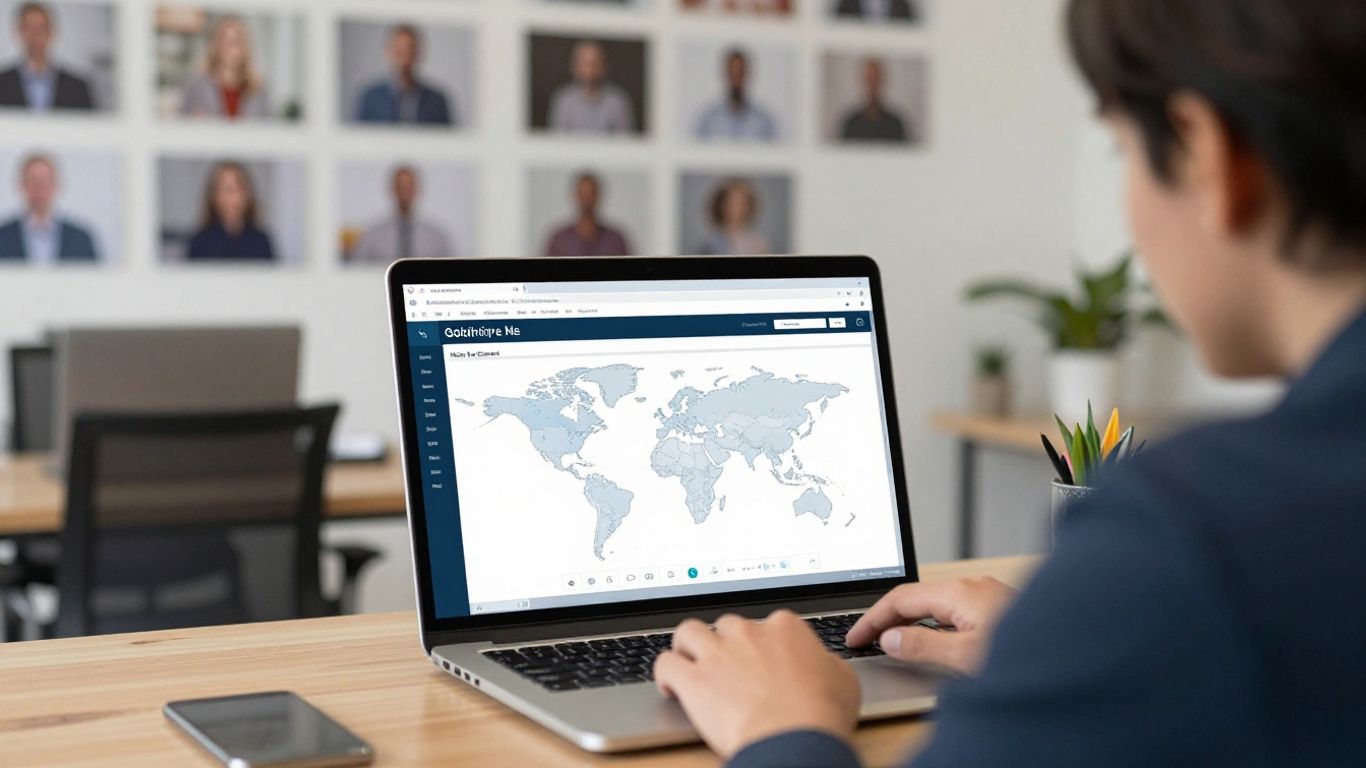
Meeting preparation should cover more than an agenda and attendee list. The learner may need to consider who is likely to speak first, how disagreement tends to surface, whether silence signals thoughtfulness or hesitation, and how much formality the setting calls for.
Calendar-based preparation can make this support timely. Bearings includes meeting prep via calendar integration, surfacing who is in the room and how they operate before the meeting. The advice should remain concise enough to use between other preparation tasks.
Practicing feedback, disagreement, and decision-making
These are high-value practice areas because they expose different assumptions about respect, authority, and commitment. Rehearse a conversation about a missed deadline, a rejected proposal, or a decision that needs clearer ownership. Then practice a second version that changes the pace, level of directness, or setting.
A useful practice sequence can be simple:
- State the business need without assigning motive.
- Ask how the other person understood the request.
- Test whether agreement means approval, consideration, or a conditional next step.
- Confirm the owner and timing in language both people accept.
This is not a script to deliver mechanically. It is a way to notice which part of the conversation needs clarification before the stakes rise.
Debriefing interactions while details are still fresh
A debrief works best soon after the interaction, while exact words, pauses, and reactions are still available. Ask what the learner expected, what actually happened, and which interpretation remains uncertain. A short reflection can prevent one awkward exchange from becoming a sweeping judgment about a colleague or destination.
Bearings includes situation debrief for real-time analysis while an interaction is still fresh. Used well, that kind of reflection turns an uncomfortable meeting into evidence for the next one rather than a private story about failure.
Supporting the transition from arrival to repatriation
The support plan should change as the assignment changes. Arrival guidance may focus on routines and first introductions; later coaching may address influence, team leadership, or a partner's loss of professional identity. Repatriation deserves preparation too, since returning employees may encounter changed expectations at home.
Mobility teams can schedule check-ins around these transitions without assuming that every assignee follows the same emotional or practical pattern. The useful question is what has changed and what support is now relevant.
How managers can use cross cultural training with global teams
Cross-cultural coaching is not only an assignee benefit. The host manager receives the employee day to day and often controls the meetings, feedback, delegation, and decisions that determine whether the relationship works. A manager who adjusts their approach can remove friction that the assignee cannot solve alone.
This is especially important on teams that include several cultures. The manager's task is not to choose one correct style, but to create enough shared clarity that different styles can contribute without constant misinterpretation.
Adapting feedback to individual communication preferences
Feedback lands differently depending on the person, the setting, and the relationship. Some employees need a direct description of the gap and the expected correction; others need private context and time to process before discussing a change. Public correction may damage trust even when the manager intended efficiency.
Start by asking how the person prefers useful feedback, then observe whether the arrangement works. Individual coaching cards can help managers remember those preferences without turning them into fixed labels.
Improving work handoffs across cultures
A handoff fails when the sender assumes that “take a look” means the same thing to the receiver. One person may begin immediately with a rough draft, while another waits for a defined scope, decision rights, and deadline. The resulting delay can look like poor ownership when the real problem was an unshared operating model.
A better handoff names the outcome, authority, timing, and questions that should come back. Work-handoff coaching can also help a host manager adapt the assignment to how each person tends to approach that kind of task.
Interpreting silence, pushback, and agreement
Silence is not a universal signal. It may indicate respect, uncertainty, disagreement, translation time, or simple concentration. Pushback may show engagement rather than hostility, while a polite “yes” may mean the person has heard the request but has not committed to it.
Managers should check their interpretation with a neutral follow-up: “What concerns should we address before we proceed?” or “What would make this deadline realistic?” These questions create room for clarity without forcing a person to perform agreement publicly.
Identifying relationship friction before it escalates
Friction often appears first as repeated small events: one colleague stops volunteering, another rewrites every handoff, or a manager begins avoiding a particular meeting. Treating each event as a personality issue can allow the pattern to harden.
A team friction map or structured observation log can help identify which relationships need attention. The purpose is early conversation, not surveillance. Managers still need to hear directly from the people involved and protect their trust.
How mobility teams can measure training effectiveness
Measurement should show whether support is being used, whether capability is developing, and where assignments may need attention. It should not turn private coaching into an employee-monitoring system. Confidentiality is not just an ethical preference; people give better information when they know it will not be used to single them out.
Mobility teams should define measures before launch and separate program signals from individual performance decisions. A dashboard full of activity counts can look impressive while saying little about whether people are handling real interactions more effectively.
Tracking participation and engagement responsibly
Start with basic measures such as enrollment, active use, completion of optional practice, and participation by employee, partner, or manager seat. Read these as access and engagement signals, not proof that someone has gained cultural capability.
Explain what is collected, who can see it, and how small groups are handled. If participation data is used to improve outreach, say so plainly. Trust supports more honest engagement than pressure does.
Monitoring progress across cultural capability areas
Track movement across practical areas such as meeting preparation, feedback, handoffs, relationship building, and reflection after difficult interactions. A person may improve quickly in meeting confidence while still needing help with indirect disagreement.
The following structure can keep reporting tied to decisions rather than vanity metrics:
| Capability area | Useful signal | Program question |
|---|---|---|
| Meeting context | Preparation and reflection activity | Are people receiving support before key interactions? |
| Work handoffs | Repeated clarification or revised ownership | Where do manager-assignee expectations diverge? |
| Relationship health | De-identified friction patterns | Which team dynamics need earlier attention? |
| Household adjustment | Partner participation and support needs | Are families receiving relevant support? |
The table is not a scoring system for individuals. It is a prompt for the mobility team to examine where the assignment experience may be under-supported and what intervention is appropriate.
Using de-identified signals to spot assignment risk
A program can learn from patterns without exposing a person's private coaching. For example, a cluster of declining engagement, partner nonparticipation, and repeated relationship friction may justify a general support review. It should not automatically produce a label or a disciplinary action.
Bearings provides a de-identified view of where assignments break down, alongside always-on coaching for the people involved. Mobility teams should use those signals as an invitation to ask better questions, not as a substitute for consented human contact.
Connecting training insights to program KPIs
The most useful measures connect cultural support to existing program decisions: assignment continuation, manager readiness, partner enrollment, intervention timing, and employee experience. Avoid claiming that coaching alone caused a business result when many factors shaped it.
Instead, establish a baseline, document what support was offered, and compare patterns over time. A global mobility coaching platform can make assignment experience more visible, but the program still needs clear definitions and careful interpretation.
Conclusion
Online Cross Cultural Training is most useful when it follows the assignment rather than ending at departure. Put real relationships, city-level context, household needs, and manager behavior at the center, then measure support in a way that protects trust. The result is not a set of rigid cultural rules; it is a practical system for helping people notice, test, and improve how they work together.
Frequently Asked Questions
What is Online Cross Cultural Training?
It is ongoing guidance that helps employees, managers, partners, and families work through cultural differences in specific situations. It can include preparation, practice, reflection, and support during different assignment stages.
Why is one pre-departure course often insufficient?
Before departure, learners usually lack the relationships and live situations needed to apply the material. Once they arrive, their questions become more specific, so continued support is easier to use and remember.
Should training focus on countries or individuals?
It should use destination context as a starting point but focus on the people and situation involved. Individual preferences, city differences, workplace norms, and relationship history all shape how an interaction unfolds.
Should partners and families receive cultural support?
Yes. Partners and children experience the move in different settings, including schools, healthcare, neighborhoods, and daily routines. Their adjustment can affect the employee's ability to remain engaged in the assignment.
How can managers support a multicultural team?
Managers can clarify expectations, ask how people prefer feedback, make handoffs explicit, and check interpretations of silence or agreement. They should adapt without treating any individual as a stereotype.
How can cultural training avoid stereotyping?
Present cultural information as a hypothesis rather than a rule. Encourage observation, respectful questions, and revision when the actual person or situation does not fit the initial expectation.
How should mobility teams measure training?
Use a mix of access, engagement, capability, and assignment-level measures. Report patterns responsibly, protect private information, and avoid treating participation or coaching activity as proof of business outcomes by itself.